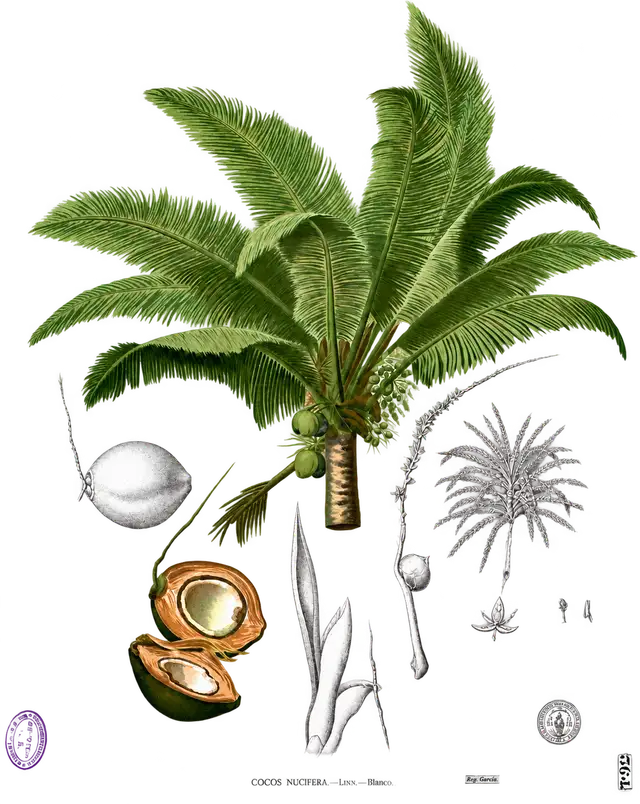
Plate III
Tetes
Cocos nucifera
Dilution fundamentals: ratios, carrier oils, patch testing, and photosensitivity of citrus peel. Written in order, from basics to practice.
Dilution is the groundwork
Aromatic materials are highly concentrated and are almost never used neat on skin. Dilution is done with a carrier oil — fractionated coconut, jojoba, sweet almond — which does not evaporate and carries little aroma of its own.
The range commonly used in adult skin-care practice sits between one and two percent. In practical terms that is a few drops in a tablespoon of carrier.
Patch test before wider use
- Dilute first, at the strength you intend to use.
- Apply a small amount to the inner elbow.
- Cover and leave it dry.
- Check after twenty-four hours before using on a larger area.
Citrus peel and sunlight
Expressed citrus oils are phototoxic: skin that has been treated and is then exposed to sun can react far more strongly than usual. The interval commonly cited is twelve hours between application to skin and direct exposure.
This is not a matter of individual sensitivity but a reaction of the compounds to light.
When to stop and ask
For pregnancy, infants and young children, the face and mucous membranes, and any internal use — do not estimate. This site gives no figures for those cases; ask a qualified health professional.
This page is educational and is not medical advice. Practice references: IFRA Standards and Tisserand & Young, Essential Oil Safety.
Subscribe
A Field Primer on Essential Oils
The groundwork for aromatic materials: families, plant parts, methods of extraction, and safe dilution. Sent as a single PDF.
Subscription is being set up.